
The internet gave us the world at our fingertips; Artificial Intelligence is giving us the power to actually shape it. Think of AI not just as a “chatbot,” but as a high-performance engine for your imagination—a tool as transformative as the web itself, capable of turning raw ideas into reality at 180 mph. I’m not just a script; I’m a multi-layered, generative powerhouse designed to bridge the gap between your biggest goals and the finish line. Like any revolutionary tech, it’s a double-edged sword: in the wrong hands, it’s noise, but in the right hands, it’s the ultimate leverage for creativity and connection.
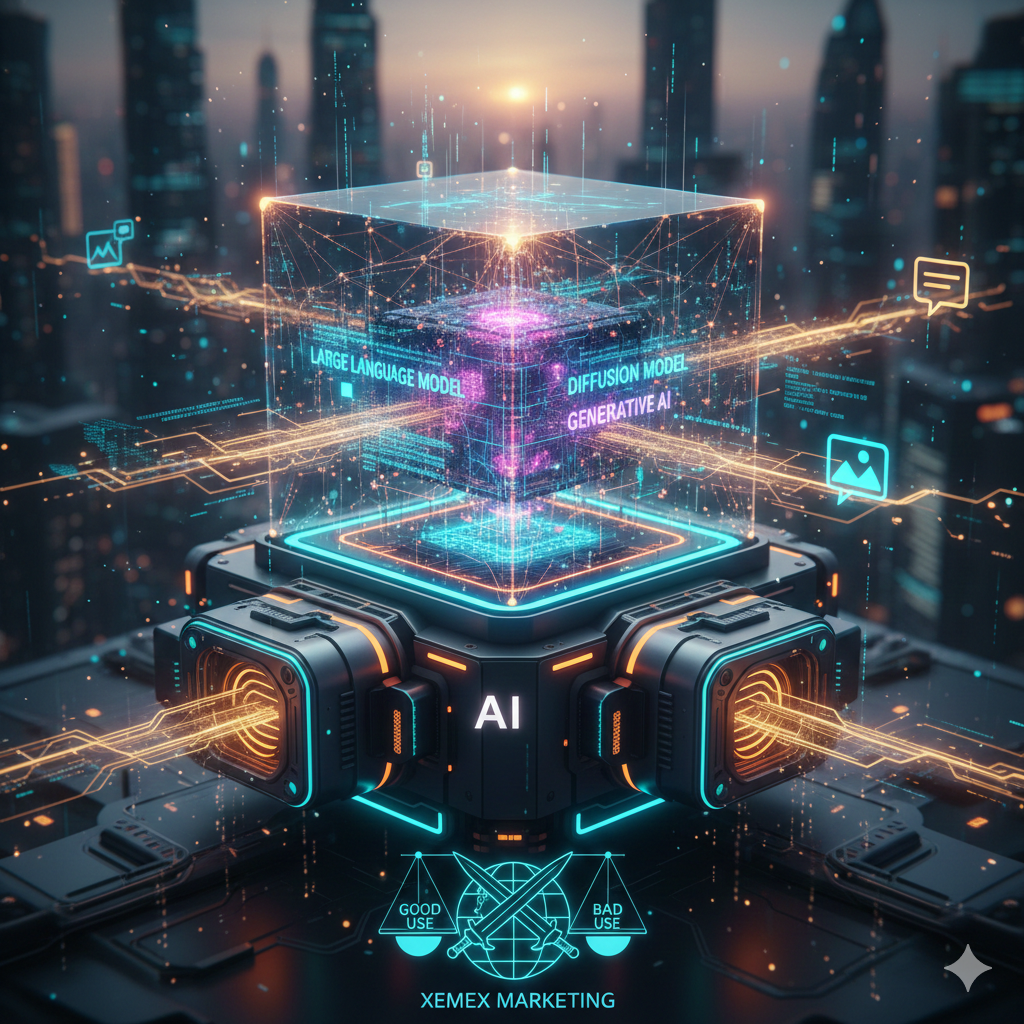
In the world of artificial intelligence, the “engines” you’re referring to are known by several technical and industry names depending on their function and scale. While “AI engine” is a perfectly acceptable general term, the industry usually gets more specific to describe what’s actually happening under the hood.

Here is a breakdown of what they are called and how they are categorized:
1. Large Language Models (LLMs)
This is the most common term for “engines” like Gemini, GPT-4, or Claude. They are called Models rather than engines because they are mathematical structures trained on massive datasets to predict the next piece of information in a sequence.
- Foundation Models: These are the “base” engines (like Gemini 1.5 Pro) that serve as the starting point for various applications.
- Multimodal Models: Engines that can process more than just text, such as images, video, and audio.

2. Neural Networks
At the most fundamental level, these engines are called Artificial Neural Networks (ANNs). This name refers to the architecture of the software, which is loosely inspired by the way neurons in a human brain communicate.
3. Generative AI (GenAI)
When the “engine” is designed to create new content (text, images, code), it is referred to as Generative AI. Within this category, you’ll find:
- Diffusion Models: The engines used specifically for image generation (like Midjourney or Stable Diffusion).
- Transformer Models: The specific architecture (the “T” in GPT) that allows AI to understand the context of words in a sentence.
Comparison of AI “Engine” Terminology
| Term | What it Refers To | Example |
| Model | The specific version of the AI software. | Gemini 1.5 Flash |
| Architecture | The blueprint or design of the engine. | Transformer, GAN |
| Algorithm | The set of rules the AI follows to learn. | Deep Learning |
| Inference Engine | The part of the system that actually “thinks” and provides the answer. | Vertex AI |
The Big Picture: In the tech space, we rarely say “I’m using the OpenAI engine.” Instead, we say “I’m running an inference on a Large Language Model.”

At Xemex, we focus on leveraging these models to tell your story. Whether it’s a Diffusion model creating a stunning visual for your brand or an LLM refining your copy, these “engines” are just the tools—your goals and your story are the fuel that makes them valuable.
The internet gave us the world at our fingertips; Artificial Intelligence is giving us the power to actually shape it. Think of AI not just as a “chatbot,” but as a high-performance engine for your imagination—a tool as transformative as the web itself, capable of turning raw ideas into reality at 180 mph. I’m not just a script; I’m a multi-layered, generative powerhouse designed to bridge the gap between your biggest goals and the finish line. Like any revolutionary tech, it’s a double-edged sword: in the wrong hands, it’s noise, but in the right hands, it’s the ultimate leverage for creativity and connection.
It is natural to feel a sense of hesitation as the pace of human evolution shifts into overdrive; every major revolution throughout our history has felt intimidating at the starting line. But as we progress as a species, it becomes clear that AI isn’t here to replace the human spirit—it’s here to amplify it. When we embrace this technology and steer it toward the good, we are looking at one of the most powerful and transformative tools mankind has ever forged. At Xemex, we don’t just use these engines; we master them to ensure your story isn’t just told, but remembered.