
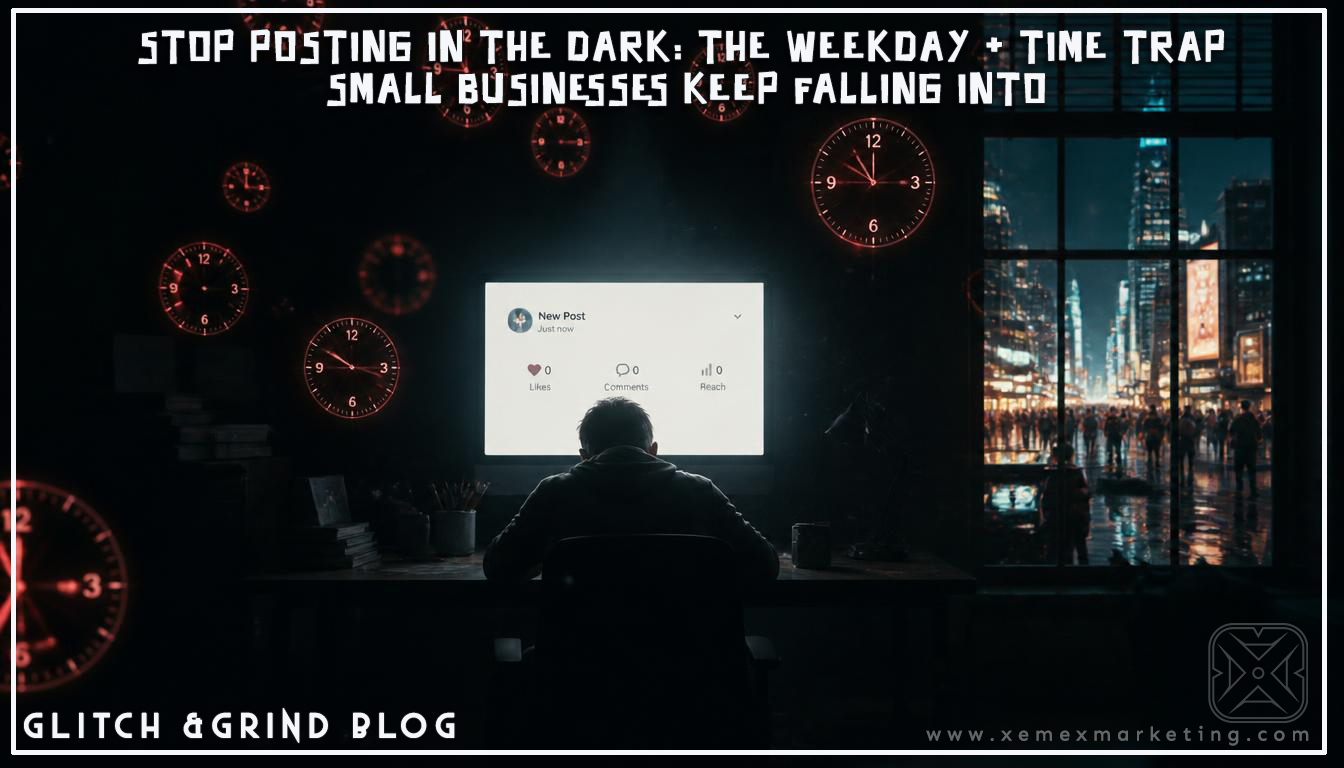

STOP POSTING IN THE DARK: THE WEEKDAY + TIME TRAP SMALL BUSINESSES KEEP FALLING INTO
You can have great content and still lose if you post at the wrong time. Most Denver small business owners don’t realize the content timeline is real-time competition. When your post goes live, it’s fighting for attention in a small window. Miss that window and your post can stall for hours—or never get traction.
And here’s the part that hurts: the “best time to post” isn’t a universal secret. It changes by platform, by your audience’s schedule, and by what people are already doing that day. If you’re posting like it’s random, you’re basically gambling with your reach.
In this post, we’ll cover the simple schedule logic that helps you stop guessing and start stacking consistency. You’ll learn what to test, how to read results, and how to schedule around real customer behavior in Denver.
BRUTAL TRUTH: If you don’t control your posting window, your algorithm is basically choosing when you fail.
THE PROBLEM BREAKDOWN
WHY “POST WHEN YOU FEEL LIKE IT” KILLS RESULTS
Posting randomly trains nobody. It tells your audience: “sometimes we show up.” That lowers expectation and reduces the chances people will see you when they’re in decision mode.
WHY DENVER MATTERS (YES, EVEN FOR THIS)
Denver isn’t just “Colorado.” It’s a work schedule, commute rhythm, weekend patterns, and seasonal lifestyle shifts. People don’t consume content randomly; they consume it when they’re between tasks.
WHY YOU’RE PROBABLY LOOKING AT THE WRONG METRIC
Likes are not the goal. A post’s job is to generate the next step:

- clicks
- DMs
- calls
- bookings
- saves/shares that lead to awareness
If you measure the wrong thing, your schedule will never improve.
THE WEEKDAY + TIME BLUEPRINT (TEST THIS)
TIP 1: RUN A 2-WEEK POSTING WINDOW TEST
Don’t rewrite your whole strategy. Test timing with structure:
- Pick 3 time slots you think might work
- Run them consistently across 10–14 days
- Keep content format similar per slot
Why it works: you’re controlling variables instead of guessing.
Suggested time slots (Denver-friendly starting points):
- Late morning (11 AM–1 PM)
- Early evening (5 PM–7 PM)
- Weekend late morning (10 AM–12 PM)
TIP 2: MATCH POST TYPE TO MOMENT
Different content wins at different times.
- Educational posts: morning/early afternoon
- Offer posts: early evening when people are planning
- Proof posts (before/after, testimonials): when people are browsing leisurely
Why it matters: you’re feeding the brain at the moment it’s ready.
TIP 3: USE “FIRST HOUR INTENT”
Watch performance in the first hour:
- If engagement starts fast and holds → your timing is strong
- If it starts slow → your audience didn’t care at that moment
Then adjust based on consistent patterns, not one post.
TIP 4: KEEP A SIMPLE SCHEDULE CALENDAR
Use a weekly structure:
- 2 educational posts
- 1 proof post
- 1 offer/CTA post
This ensures you’re not only posting “at the right time,” but also posting for the right stage.
COMMON MISTAKES TO AVOID
- Posting daily with mixed content instead of consistent job-to-content mapping
- Changing time slots every other day (you can’t learn that way)
- Only tracking likes instead of next-step metrics
- Ignoring platform differences (IG vs FB vs LinkedIn behaves differently)
THE XEMEX EDGE
At Xemex, we help you turn consistency into conversion—so your posting schedule becomes a system, not a vibe. Whether we’re aligning your content calendar, your audience targeting, or your offers with the right moments, we build mission-driven momentum that leads to DMs, calls, and bookings. And when it makes sense for your strategy, we’ll tie video performance into the :57SecondPULSE approach so your content earns attention fast.
JOIN THE GRIND
Thanks for grinding with us through another GLiTCH &GRiND post. We’re here to help you stop guessing and start stacking results.
What platform are you posting on most right now—and what time do you usually go live?







Leave a Reply